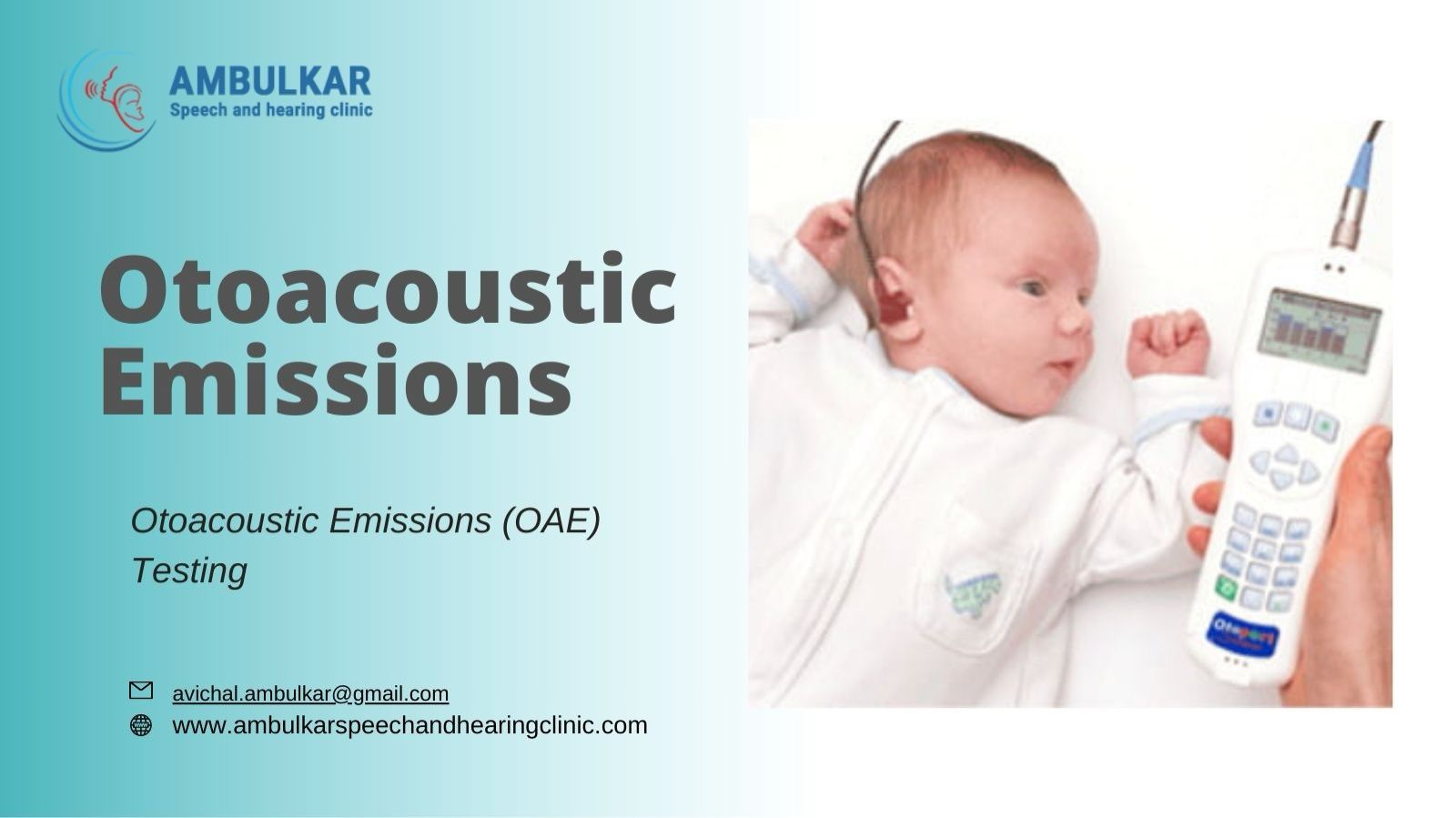
During the OAE test, a tiny tube is inserted into the ear canal. The probe emits sounds, usually in the form of clicks or tones, and contains a microphone to detect any emissions produced by the inner ear in response. These emissions, known as otoacoustic emissions, are tiny sounds generated by the inner ear when stimulated.
What are Otoacoustic Emissions?
Otoacoustic sounds are produced by a tiny part of your cochlea that vibrates when it is stimulated by a soft clicking sound. When a sound stimulates your inner ear, your outer hair cells start to vibrate. The resulting vibration is so small that it is almost impossible to hear directly, and it reverberates back into your middle ear.
Types of OAEs
There are two primary categories of Otoacoustic Emissions:
- Spontaneous OAEs: These occur naturally without any external stimulation and are often present in individuals with normal hearing.
- Evoked OAEs: These occur directly in response to an external acoustic stimulus presented through the probe. Evoked OAEs are further classified into:
- Transient OAEs (TEOAEs): Brief emissions produced in response to clicks or brief tone bursts.
- Distortion Product OAEs (DPOAEs): Emissions generated in response to two simultaneous pure tones of different frequencies.
Otoacoustic Emissions (OAE) Testing Overview
The OAE test evaluates the overall response and health of the inner ear to sound. The majority of OAE tests are performed on babies and young children who, due to their age, may not be able to respond reliably to traditional behavioral hearing tests.
How the Test Works
A soft foam or rubber tip probe is placed gently into the ear canal. Soft noises are delivered through the tip, and a connected computer captures the subtle, silent acoustic responses reverberating back from the ear canal.
Preparing for the Test
This test does not require sedation or for your child to be asleep. However, your child and everyone else present in the room must remain calm and very quiet throughout the duration of the testing. The process is entirely painless, and your child will not feel any physical discomfort or sensation.
Test Duration
The entire OAE procedure is quick and is expected to take only a few minutes to complete.
Understanding Your Results
Results are recorded as either present or absent:
- Present OAEs: Indicates normal to near-normal inner ear hearing function.
- Absent OAEs: Indicates potential inner ear response issues, which could stem from underlying hearing loss, ear wax blockage, middle ear fluid/infection, or structural malformations. Further diagnostic evaluations will be recommended to confirm the exact cause.
Why Consult a Pediatric Audiologist?
Pediatric audiologists specialize in evaluating and treating hearing conditions specifically in infants and young children. They possess the necessary expertise and child-friendly tools to select appropriate tests and execute them accurately and efficiently. Should hearing loss be identified, a pediatric audiologist will guide you through tailored communication strategies, medical resources, and ongoing management.
Conclusion
Otoacoustic Emissions testing provides a non-invasive, objective way to measure how effectively your inner ear reacts to sound, helping differentiate between sensorineural and conductive hearing pathways.
Unlocking the Sound of Wellness: Discover Your Hearing Health with Otoacoustic Emissions (OAE) Testing. Contact us at Ambulkar Speech and Hearing Clinic for expert evaluation and compassionate care.